Where to Put Audio Files for Max to Read
If you want to play a single audio file without installing anything new on your Mac, at that place are several means to do so using default apps that come with your Mac.
Peradventure someone sent you an audio file or you downloaded a podcast you want to mind to on your Mac. Today we'll show you the options you lot have for playing an audio file without installing any extra or 3rd-political party software.
i. Play Audio Using iTunes
Whether you use iTunes or not to manage your music, you lot can apply it to quickly play an audio file without adding the file to the iTunes media library.
Launch iTunes so open up a Finder window and navigate to the audio file yous want to play.
Hold down the Alt/Option primal while dragging the sound file onto the iTunes window. The sound file is added to iTunes, but non copied to the media library binder on your Mac (~/Music/iTunes/iTunes\ Media/), even if the Copy files to iTunes Media folder when adding to library option is on in iTunes > Preferences > Advanced.
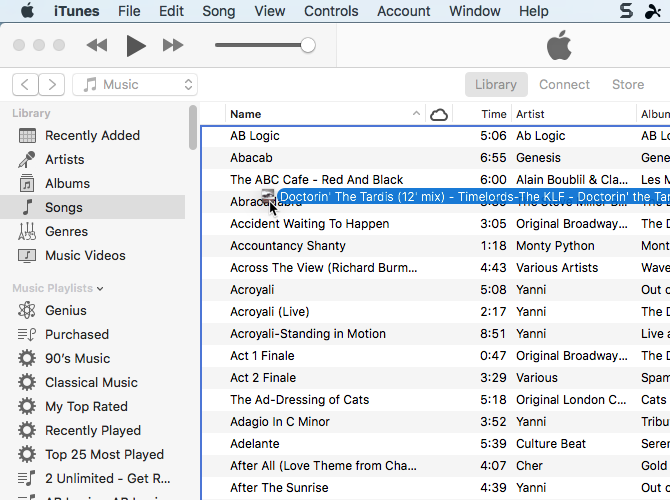
You can minimize the iTunes window while your audio file plays, so you can do other things on your Mac.
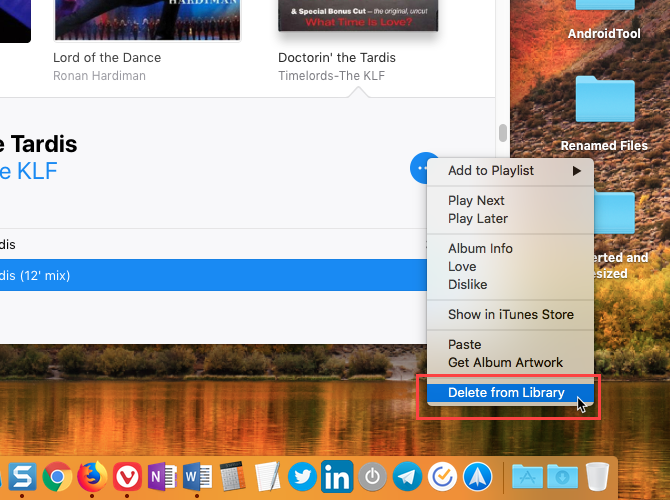
If yous don't want to go out the audio file in iTunes after listening to it, you can delete it when you're done. If yous leave the file in iTunes, it will exist backed up if yous manually back up your iTunes library, even though the file is non in your media library.
2. Play Audio Using Get Info in Finder
An easy fashion to play an audio file is to use Get Info in Finder.
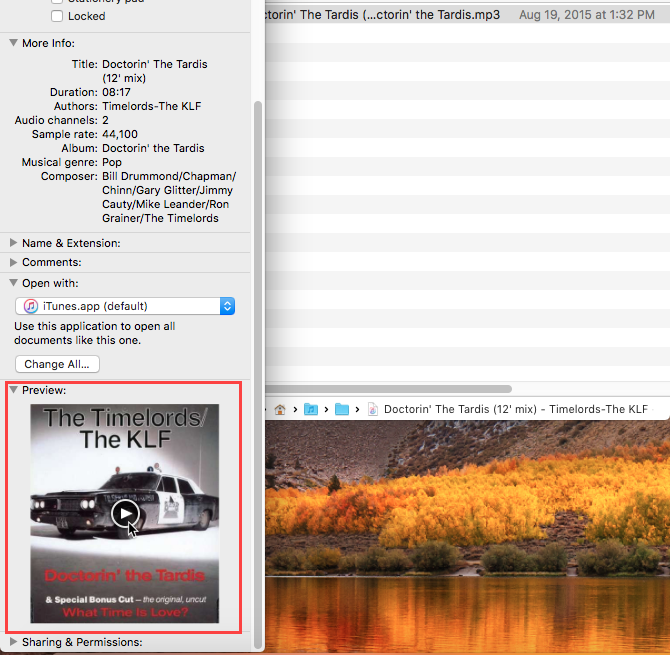
Select the file you want to play and press Control + I. In the Preview department on the Get Info pane, motion your mouse over the album cover and click the Play button.
The sound file plays while the Get Info window is open, and information technology continues to play when you minimize the Get Info window. When you shut the Get Info window, the sound file stops playing.
3. Play Audio Using Quick Wait in Finder
Quick Look in Finder provides an fifty-fifty quicker mode to play an sound file.
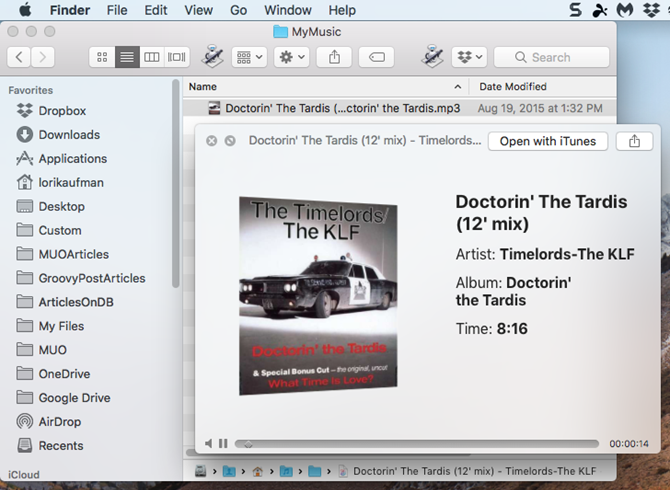
Select the audio file you want to play in Finder and and so press the space bar. The Quick Look dialog box displays, and the audio file starts playing automatically.
The disadvantage of this method is that the Quick Look window needs to stay open and in focus for the audio to continue playing. If y'all minimize or close the window, the audio file will not keep playing in the groundwork.
4. Play Audio Using QuickTime
If you want to play an sound file in the background, only y'all don't want to use iTunes at all, QuickTime is a quick and easy solution.
In Finder, right-click on the sound file yous want to play and go to Open With > QuickTime Histrion.app.
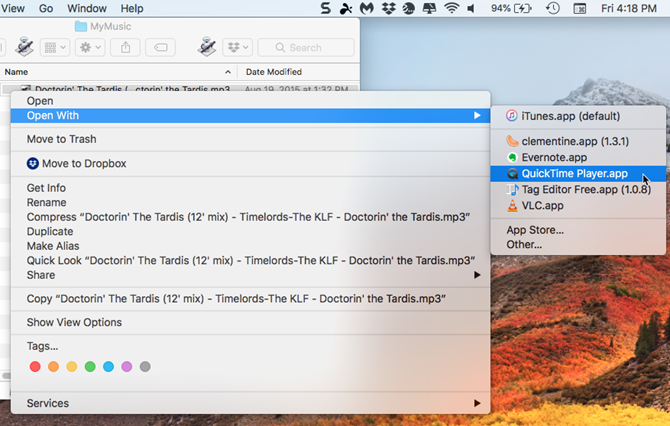
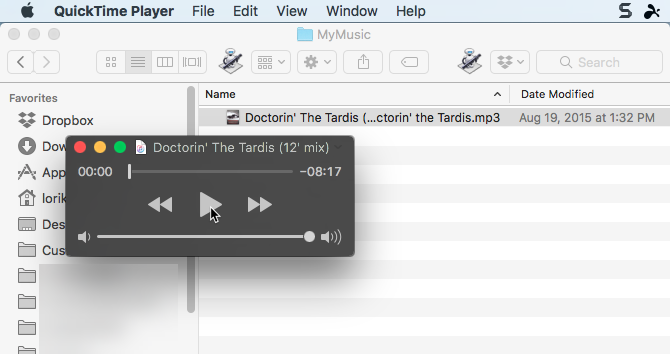
The QuickTime window opens, but the audio file does not play automatically. Click the Play button to begin playing the audio file. You can minimize the window and the audio file continues to play while you exercise other things on your Mac.
You tin also elevate and drop an audio file onto the QuickTime window to play it.
v. Play Audio Using the Command Line
If you similar using the command line, you tin can use the afplay command to play an sound file, including playing it in the groundwork. Nosotros're going to play an MP3 file in our instance, but y'all tin can play many other sound formats using afplay.
Open Concluding from Applications > Utilities. Then, run the following command, replacing audiofile.mp3 with the total path to the audio file y'all want to play:
afplay audiofile.mp3 For instance, our command looks similar the following:
afplay /Users/lorikaufman/Music/MyMusic/Doctorin\ The\ Tardis\ -\ Timelords\ -\ The\ KLF.mp3 If there are spaces in your path or file proper name, put a backslash in front of each space.
To play an sound file from your iTunes library, use the following folder path in the afplay command:
~/Music/iTunes/iTunes\ Media/Music/. If the Keep iTunes Media folder organized option is enabled in iTunes > Preferences > Advanced, yous tin can use tab completion to navigate to the artist, album, and then song. Songs start with the track number when this option is on.
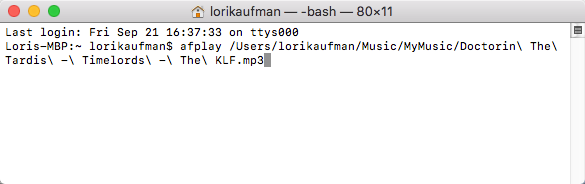
To utilize the afplay control to play an audio file in the background, add a infinite and so an ampersand (&) to the end of the command. For case, our command to play an audio file in the background looks like the following:
afplay /Users/lorikaufman/Music/MyMusic/Doctorin\ The\ Tardis\ -\ Timelords\ -\ The\ KLF.mp3 & You do not have to leave the Final window in focus or fifty-fifty get out the window open. Yous can close the Terminal window and the audio file keeps playing.
When yous shut the Terminal window, you'll be asked if you want to terminate the afplay process. It may seem strange but click Terminate. Your sound file continues to play.
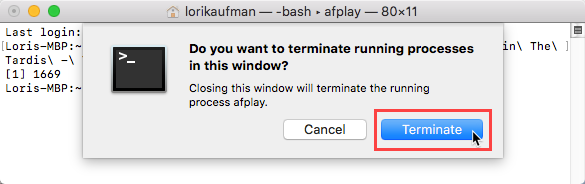
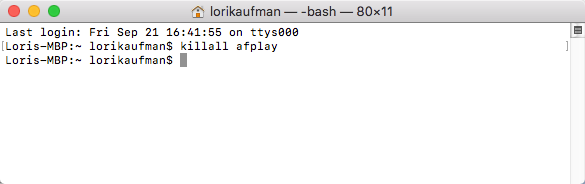
To stop an audio file y'all're playing in the background using the afplay command, open a Final window once more and blazon the following command:
killall afplay The audio file stops playing instantly.
Other Ways to Play Sound Files on Mac
The options we discussed here are all available using tools included in the Mac organisation. Just at that place are other music role player apps out there that tin can play audio files (and other types of media files) if you lot want an app to play your music but don't desire to use iTunes.
As well, if y'all have an old iPod that has music you want to go off of it, you tin can transfer those sound files to your computer.
About The AuthorSource: https://www.makeuseof.com/tag/play-audio-mac-without-install-apps/
0 Response to "Where to Put Audio Files for Max to Read"
Enregistrer un commentaire